A filmmaking robot

A filmmaking robot 

http://www.halo.gen.nz/robot/

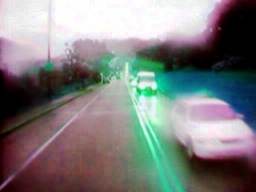
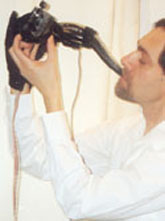
This robot makes short films based on its visual experience. Its eyes travel about the city on buses while the body sits in a gallery. The eyes collect snippets of video, and transmit them to the body when their buses come within range of a Cafenet wireless internet node. The robot body splits the video into individual frames and analyses each one, obtaining twenty numbers reflecting the arrangement of colour, shape and detail within the frame. These numbers are treated as coordinates in a twenty dimensional space, in which distance is somewhat related to visual difference. For twelve hours a day the robot traces a zigzagging path through this space. This path passes through a series of images, which become a video sequence. Visitors to the gallery can see this video, called variously the robot’s “dream” or “stream of consciousness”.

At the end of the day the robot looks over its days work and joins the best parts together as a finished film. The robot uses neural networks and heuristic rules to choose waypoints for its daily dream, but the finished film is mainly selected for the smoothness of its movement through the space. The robot will remember everything it sees until it has five million images in its mind, after which it will replace its least favourite images with new ones. In addition to getting images from the eyes, the robot creates false memories by combining and manipulating well-liked and overused images.

Vía: video_thing

filmmakingrobot.jpg

Sonidos de murciélagos y habla humana

Sonidos de murciélagos y habla humana 

http://www.hhmi.org/senses-esp/c230.html 

Quizás el logro más importante en el procesamiento del sonido es la habilidad de entender el habla. Dado que esto es un rasgo característicamente humano, parecería difícil de estudiar en animales. A pesar de esto, un investigador en la Universidad Washington, en Saint Louis, cree que puede ser estudiado, trabajando con murciélagos.

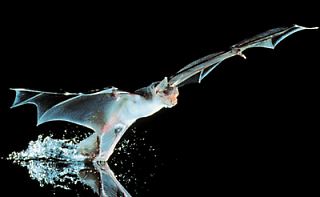
Los murciélagos navegan y localizan a sus presas por ecolocalización, una forma de sonar que utilizan para emitir sus propias señales y, luego, analizar los sonidos reflejados. Nobuo Suga, quien ha pasado casi 20 años investigando los mecanismos neuronales utilizados por los murciélagos para procesar las señales reflejadas, está convencido de que tal investigación puede ayudar a la comprensión del habla humana.

Cuando Suga disminuyó las grabaciones de alta frecuencia, sonidos de duración corta que los murciélagos pueden oír, encontró que sus componentes acústicos eran sorprendentemente semejantes a los sonidos de comunicación entre mamíferos, inclusive parecidos al habla humana. Existían algunas frecuencias constantes y ruidos explosivos, no diferentes de los sonidos de vocales y consonantes, así como también componentes de frecuencias moduladas, que eran similares a aquellos presentes en combinaciones de fonemas tales como “papá”.

Además, Suga demostró que cada uno de estos elementos acústicos se procesan por una vía distinta de neuronas superiores. Esas neuronas, entonces, combinan y refinan los aspectos diferentes del patrón del sonar, de la misma manera que las neuronas específicas de la orientación espacial, combinan la duración y la intensidad de las entradas de las señales de los sonidos.

Suga también identificó mapas de neuronas en la corteza auditiva de los murciélagos, que registran pequeñas variaciones en cada uno de esos componentes del sonido. El cerebro de los murciélagos utiliza tales mapas neuronales para registrar los cambios a su alrededor. Los humanos podrían usar mapas semejantes para procesar los patrones acústicos básicos del habla, aunque la misma requiere mecanismos adicionales superiores, indica Suga.

“La habilidad de reconocer las variaciones en el sonido, es lo que permite que nos podamos entender unos con otros. No existen dos personas que pronuncien las vocales y las consonantes de, exactamente, la misma manera; pero somos capaces de reconocer las similitudes”, dice Suga. Cree que los mapas neuronales pueden jugar un papel importante en el reconocimiento de la voz de los humanos, la habilidad de reconocer quién habla y también qué se está diciendo.

Vía: en_el_aire

murci lago 1.1.jpg

Google Mars

http://www.google.com/mars/
About Google Mars

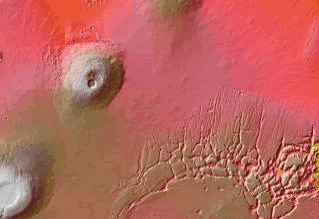
Google Map de Marte.
Por si te pasas por allí y necesitas pistas…

google_mars.gif

Radar Live Act #60. Roel Meelkop [Goem · Thu20]

Radar Live Act #60. Roel Meelkop [Goem · Thu20] (Holanda)
Sábado 1 de abril · 22.15 h.

Literal:
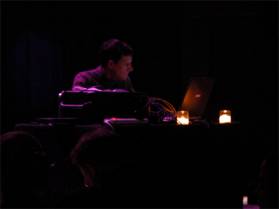
Tras el directo de este pasado domingo seguimos nuestras actividades con uno de los músicos europeos más activos de las dos últimas décadas, el holandés Roel Meelkop, que junto a Frans de Waard y a Peter Duimelinks mantienen activo el proyecto más electrónico, y quizás más conocido para muchos de vosotros, de sus múltiples propuestas, nos referimos a Goem. Estos veteranos músicos están directamente relacionados (en especial Frans de Waard) con el ya legendario sello europeo Staalplaat, uno de los más prestigiosos y activos de las últimas décadas. Allí, Roel junto a Frans editaban algunos de los trabajos de Kapotte Muziek, uno de sus antiguos proyectos donde experimentaban con el sonido en un terreno cercano al collage sonoro y la conceptos más electroacústicos.

De hecho, Roel Meelkop en sus trabajos en solitario ha continuado desarrollando trabajos en esa línea de investigación del sonido y junto a Jos Smolders y el propio Peter Duimelinks desarrolló también un mágnifico proyecto llamado Thu20. Aparte de su actividad en Goem, Meelkop ha editado sus discos en infinidad de sellos de todo el mundo desde Trente Oiseaux hasta 12K por ejemplo. En solitaro, su música es más sosegada que junto a sus compañeros, utilizando trabajos de campo para realizar sus atmósferas. Roel es un gran creador de soundscapes y gran parte de sus creaciones en solitario están enfocadas al mundo de las instalaciones de arte, lo que puede dar una dimensión de música.

Este live act hemos decidido hacerlo en sábado en lugar de en domingo como es habitual, puesto que precisamente el domingo también habrá una interesante actuación en Madrid del ucraniano Andrey Kiritchenko de la que os informamos en este mismo comunicado más abajo. El horario pues será direrente la noche del sábado en Radar. Abriremos el bar algo más temprano de lo habitual los fines de semana. Las entradas en venta anticiapada están disponibles en el bar desde el fin de semana pasado y como siempre decimos, sólo en el caso de que queden algunas el día del directo se pondrán a la venta en puerta. En esta ocasión abriremos a las 22.15 horas.

+Info:
http://www.earlabs.org/THU20
http://www.archive.org/details/lm0
http://www.dustedmagazine.com/reviews/1762
http://www.dustedmagazine.com/reviews/2578

PRÓXIMOS CONCIERTOS:
Esther Venrooy (Holanda)
Domingo 16 de abril · 21.30 h.

+Info:
www.esthervenrooy.com
www.esthervenrooy.com/hout_mini

radar madrid

Intervenciones.TV

CONVOCATORIA “INTERVENCIONES TV.7” www.intervenciones.tv

Vuelve El proyecto “Intervenciones TV” propone el medio televisivo y la televisión en internet como soporte para propuestas de creación audiovisual. Reflexión sobre el lenguaje televisivo, píldoras de carácter publicitario ó experimental, cuestionamiento del medio y de su mensaje, insertos por sorpresa en la programación, en la red, en la pantalla.

Un proyecto de Fundación Rodríguez producido por CC. Montehermoso.

Premios:
4 artistas invitados/as: 500 euros c/u. 4 autores/as seleccionados: 500 euros c/u. 1 autor/a por voto popular: 500 euros. (Votaciones online: 15 al 24 de mayo.)

Características de las piezas:
Formatos AVI, MOV, WMW, SWF, MPEG y limitar el conjunto de los vídeos enviados a un total de 2 minutos y 10 megas.

Plazos
Las producciones podrán ser enviadas desde el 30 de marzo de 2006 hasta las 20:00 horas del 10 de abril a Centro Cultural Montehermoso, C/ Fray Zacarías Martínez, s/n. 01001 Vitoria-Gasteiz. Spain
También en la página web www.intervenciones.tv/uploads.

Bases completas PDF aquí

SENSOR WiKi

Sensor Wiki
hosted by McGill´s IDMI Laboratory

http://www.sensorwiki.org/index.php/Main_Page 

The aim of this project is to provide a thorough review of the main types of sensing technologies used in musical applications. As new sensing technologies become available, this open space will provide an up-to-date resource for researchers in the field, complementing information available in books and textbooks such as Trends in Gestural Control of Music (Wanderley and Battier, eds. 2000) and Digital Musical Instruments: Control and Interaction Beyond the Keyboard (Miranda and Wanderley, forthcoming).

More than 30 techniques are described, along with their sensing principles and examples of actual devices that implement those principles.

For each sensing technique, one or more devices are described with information on how to obtain them (links to distributors, prices), as well as photos of the device and necessary setup/conditioning circuits, circuit diagrams, one or more videos showing the devices used in practice, and finally, simulation circuits compatible with the software CircuitMaker 

This project was started in 2004 by Prof. Marcelo M. Wanderley and several graduate students at the Input Devices and Music Interaction Laboratory  , at McGill University , Montreal, Quebec, Canada. The main students collaborating in this project include: Paul Kosek, Mark Zadel, Elliot Sinyor, David Birnbaum, Joseph Malloch, Mark Marshall, Avrum Hollinger, Stephen Sinclair, Simon de Leon and Alexander Refsum Jensenius.

Since November 2005, this wiki has been available to the community in general. Please take the time to contribute and expand this intiative.

 
sensorwiki.jpg

How to Prevent Hearing Loss

How to Prevent Hearing Loss

by Eliot Van Buskirk @ wired_news

I’ve experienced bouts of fairly severe tinnitus on several occasions after a loud rehearsal or concert, and I know I’m not the only person who’s guilty of having been somewhat cavalier about hearing loss. Now that so many of us seem to spend half our time with headphones on or listening to car, stereo or TV speakers, a new generation of the hearing impaired is on the horizon, and many of us will be affected unless we start to pay more attention.

Hearing loss has been called a loss of intimacy, because as hearing acuity declines, the ability to pick out a voice over background noise is one of the first things to go. The hearing-impaired often sit there nodding politely, effectively zoned out from conversations because they get sick of asking, “What?” Another unfortunate aspect of hearing loss is that it tends to affect people who value music and sound more than anyone else, the price for spending so many hours listening to music. Worse still, most commonly available headphones force users to increase volume in order to hear music more clearly.

[… artículo completo / full text] 

“If you have a field of grass and you walk on it, you compress the grass and it bends down over the night, and in a few days, it springs back up and is OK again. But if you keep doing that over and over, you wear a path in it. And that’s kind of what happens with hearing loss.”

hearing_loss.JPG

Towards machinic male-dicta and synthetic hissy fits

http://www.realtechsupport.org/new_works/male-dicta.html

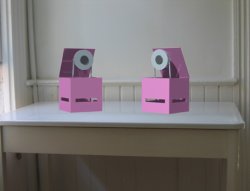
Amy and Klara have similar interests. They both read Cosmopolitan and Salon.com, for example. But they do not get along. Not at all. Maybe Klara’s thick German accent bothers Amy. And neither of them particularly likes the color pink. Unfortunately for Amy and Klara, they live on the same block and have pink houses! And when they become agitated they tend to fall into mutual accusations and even rants. Yes, it can get rather nasty at times. Best then just to leave them be and to stay clear of the hissy fits. Else you risk being drawn into the fighting.

Listen to an argument between Amy and Klara.
[.wav, 576kb]
Listen to the argument between Amy and Klara almost getting out of hand.
[.wav, 448kb]

pink_boxes_sm.jpg

via: neural.it

Tavofono | Telapafono

Tavofono | Telepafono
Crispin Jones with Sara Manazza

This pair of projects was produced with Sara Manazza for a show at the Telecom Italia Future Center in Venice for the E1 exhibition unit at Interaction Ivrea. The exhibition was aimed at children and making interactive workshops for them to engage with. For various reasons it was not exhibited at the show.You can read about the show here

http://www.mr-jones.org/telepafono/tavo-telepa.html#

Tavofono
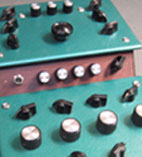
The user of this installation can record audio into the buttons that make up the table surface, they then write on the button what they have recorded. They can then make a telephone call, but they cannot speak directly to the person they are calling, rather they must utilise the audio they (or others) have recorded into the different buttons on the table. Over time the table becomes an encyclopedia of telephone conversations.
Watch video (8mb)

Via: neural.it

tavofono

dailymotion mejor web 2.0

Dailymotion.com es el sistema que estamos utilizando para www.forwardtv.net creo que no es el más conocido pero a mi es el que más me gusta, por su facilidad, por su portabilidad, por su origen, etc etc Es bastante recomendable para subir vídeos y transportarlos a todos los sitios imaginables en los que puedas insertar código html. je.

El segundo en liza ha sido You Tube.com Otro que está muy bien

SUMMARY
Whether it’s comedy, gore, or wedding videos, the top three contenders in this category have what you’re looking for. They’ve accrued a massive collection of video clips from around the world and across the web. Dailymotion comes out ahead by merit of clean site design, well organized social structure, and clear video hierarchy. Even though YouTube lacks the same aesthetic, its older and more robust community keeps it a close second. Metacafe manages to pull off a similar layout with a less cluttered feel and create an enormous draw to keep watching just one more clip. It doesn’t have the size (and thus the volume of content) behind it yet or nearly the sense of community built around topical groups, but it’s on its way. All three sites have a different “feel” and unique content that will keep you watching much longer than you expect.

Entrevista a uno de los creadores de Daylimotion: http://web2.0awards.org/web20-interviews/dailymotion.php
Página de los premios (el resto de categorías es interesante hacer mención de algunos programas tb): http://web2.0awards.org/
El Blog de Daylimotion.com

Bob Gluck: eShofar2, fusión tradición y tecnología

http://www.electricsongs.com/eShofar/index.html

El shofar es una trompeta especial, tomada del cuerno de un carnero kosher, es utilizado en varias fiestas judías.

Literal:
The traditional shofar is an ancient instrument whose purpose is not strictly musical. The shofar blast - in our day, mostly limited to the Jewish High Holy Days - provides a call to reflection, an alarm, a wake-up call … Digital processing of the sounds allows one to listen ‘inside’ the sound of the shofar.

Listen:

.

via: neural.it

eShofar2.jpg

Dewanatron

http://www.dewanatron.com/

Dewanatron: a family of instruments which hazard unpredictable behaviors and self playing tendencies. They make all previous and future instruments obsolete.

Via: neural.it

home_melodygin.jpg

Blogak 2.0

Blogak 2.0 

http://www.blogak.org/ 

El 6 de abril, en la Universidad de Deusto, Bilbao tendrán lugar las jornadas Blogak 2.0 dedicadas, como su nombre indica a aplicaciones, conceptos y proyectos relacionados con lo que se ha venido a denominar como web 2.0. Aunque el concepto es complejo y amplio, podemos definir web 2.0 como un conjunto de aplicaciones, servicios y lugares dinámicos y participativos en internet que funcionan simplemente con un navegador. El usuario no necesita instalar software en su ordenador ya que todo se ejecuta en el servidor, en el mismo momento de la navegación. Utilidades como los blogs, Flickr, writely, los wikis o delicious pertenecen a esta nueva “revolución” en el uso de internet.

Wikipedia aporta una visión más técnica sobre el asunto y en newmediafix encontramos una conversación con José Luis Brea hablando del fenómeno.

En las jornadas de Bilbao participarán reconocidos especialistas como Martin Varsavsky, Fon; Bernardo Hernández, Google; Alberto Sánchez Escudero, Microsoft Atlas y hay abierta una convocatoria “Call for papers” para todo aquel que quiera presentar sus experiencias.

Vía: arteleku 

blogak_2_bilbao.gif

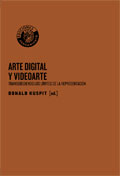
Arte digtal y videoarte

Arte digital y videoarte
Transgrediendo los límites de la representación
Donald Kuspit (ed.)

Ediciones del Círculo de Bellas Artes
ISBN : 84-86418-61-5

Literal:
Desde los años ochenta del s. XX, el entorno digital y el vídeo han sido los medios que más han contribuido a revolucionar la creación artística contemporánea. Arte digital y videoarte recoge la reflexión de cuatro destacados expertos en teoría estética e historia del arte acerca de asuntos como el efecto subversivo de la digitalización en el objeto artístico y el mercado del arte, la importancia del píxel como unidad de representación o las últimas tendencias en escultura digital. Se trata, en definitiva, de una ambiciosa cartografía de zonas sensibles de la creación artística contemporánea.

CUB-VIDEOARTE-120.jpg

W.A.M. | Women´s Audio Mission

W.A.M. | Women´s Audio Mission 

http://www.womensaudiomission.org/ 

Women’s Audio Mission is a new, all volunteer, women-run organization dedicated to the advancement of women in the recording arts. In a field where women professionals are historically under-represented, WAM seeks to create an environment that will encourage and enable the aspirations of women in the recording arts, and, in turn expand the vision and voice of media and popular culture. We provide access to audio technology, and training in its use to record sound for music, radio, film, television and the internet for women and girls.

NEED:
Women professionals comprise less than 5% of the recording industry. While many women enjoy successful careers as recording artists, the number of women “behind the glass” has not changed in over 30 years. In an era that is increasingly dependent on media technology, WAM believes that awareness, access, and training is critical to creating new economic opportunity for women. WAM also believes that women’s participation in the recording of sound for music, film, television and radio will have a direct, positive impact on content, and ensure that women’s ideas, interests and views are conveyed in media and popular culture.
womenaudiomission.jpg