
Anthony Mc Call parece asentado dentro de la vanguardia norteamericana más cool. Del post-minimal de Matta-Clark o Richard Serra al conceptual de Sol Lewitt, las Cone Series se presentan como esculturas expandidas centradas en la potencia de la luz para generar espacio. Dentro del cine ha sido incluido junto con Tony Conrad en lo que Ken Jacobs ha llamado Paracinema basándose en las propiedades formales y ontológicas del medio cinematográfico. También se puede relacionar con el cine estructural o materialista inglés y en cualquier caso con el tipo de artista que permite hablar del medio audiovisual con herramientas de análisis escultóricas.
Una vez presentado su currículum, pensar hoy el cine de Anthony McCall como una obra inmersiva evidencia una tendencia crítica y artística que no piensa la producción cultural a partir de sus materiales y sus formas, sino desde el efecto en el público. Esto tiene (ya adelantábamos) una relación directa con los mecanismos de proyección, pero también con las manipulaciones de estos que re-configuran la percepción del espacio y el tiempo de los espectadores.
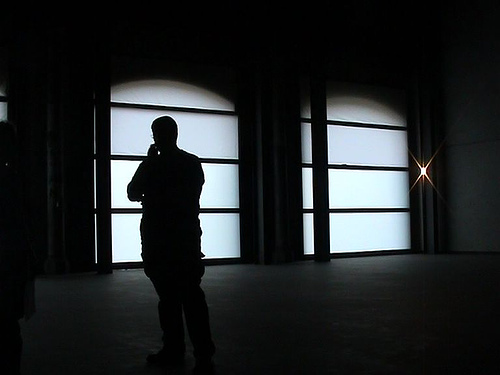
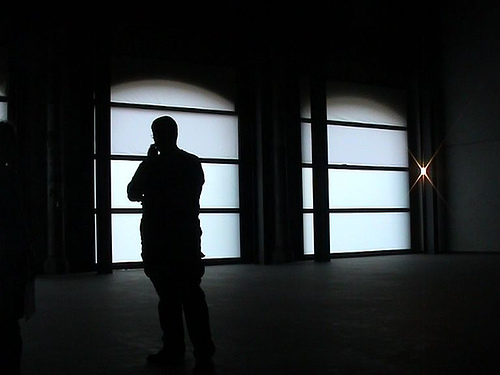
En relación al medio tecnológico la obra de Anthony Mc Call genera un espacio a partir de la luz, usando el proyector de modo concreto y creando de este modo, mediante una herramienta cinematográfica, un espacio más allá de la profundidad de campo. Genera en definitiva otro espacio ficticio que no es el que reproduce la película/film. Una maniobra que más allá del contexto norteamericano de los años 70, se opone a esa obligada naturaleza cinematográfica del mismo modo que otros medios artísticos se oponían a la perspectiva italiana. Podemos decir que una parte de la vanguardia de los 70 estaba tratando de desmontar los espacios ficticios del arte. En el caso de McCall la reflexión sobre el funcionamiento del medio va más allá en Long Film For Ambient Light, donde sólo se usó la luz, el espacio y la duración como elementos cinematográficos. Situada primero en un loft de Manhattan en 1975 y reproducida en 2007 en la Sydney Moving Image Coalition, la obra presenta literalmente un espacio cinematográfico. Una habitación cuyas ventanas han sido tamizadas con un material translúcido, se llena y vacía de luz natural según avanzan los 50 días de la instalación.
Pero las obras de McCall también transfiguran, como decíamos, la percepción del espectador. El espacio de consumo de este cine deja de ser para un grupo que mira hacia un punto y pasa a ser para distintas personas independientes, que asimilan esta luz desde distintos puntos de vista. En lugar de concentrar, dispersa a los espectadores. Es por estas transformaciones en el espectador por lo que McCall puede interesarnos ahora, al parecerse sus instalaciones a los lugares de consumo de cultura contemporánea. Si atendemos al trabajo de Greg Pope & Gert-Jan Prins, a Fades de Carsten Nicolai e incluso a ejemplos no incluidos en círculos artísticos, veremos que trabajos de luz solida siguen repitiéndose a partir de distintos medios y están completamente asimilados dentro de un publico generalizado.

Leave a Reply
Lo siento, debes estar conectado para publicar un comentario.