television 2.0

Andamos trabajando en torno al concepto de televisión y sobre todo de sus posibilidades de reapropiación. El asunto es complicado y mezcla ambiciones político-sociales tiempo ha (que aún hoy día son vigentes) y por supuesto reclamaciones presentes que no son ajenas al devenir electoral de uno y otro bando. El asunto se termina complejizando cuando en tu primera comunión has recibido una cámara de vídeo. O cómo conseguir que tanta gente haciendo vídeos no las haga públicas. Seguiremos aportando ideas bajo este tag de television 2.0 pero para empezar un recien descubrimiento:

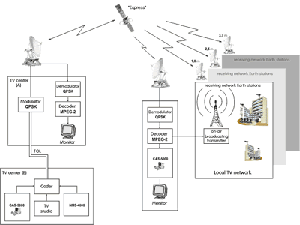
On pourrait dire que la télévision n’a pas beaucoup évolué ces dernières décennies ou, plus exactement, que ce sont les moyens d’y accéder (satellite, câble, multidiffusion…), plus que la télévision elle-même, ou plus que les programmes télévisés, qui ont évolué.

http://www.internetactu.net/index.php?p=5933

344.gif

eat it

eat it

[http://pleine-peau.com/]

links sobre podcast experimental

Las redes de conocimiento mutuo están creándose en foros, listas de correos, chat’s… es curioso cómo las cosas “nuevas” corren como la pólvora. El caso es que alguien dice en una lista cualquiera anyone recommend good podcasting sites for electronic and other alt styles of music? Y aparece automáticamente un rico debate y listado de enlaces sobre el tema:

http://www.acowo.org/
http://www.quietamerican.org/vacation.html
http://www.de-bug.de/pod/
http://www.dopplerradio.net/
http://www.nosordo.com/stream.htm
http://www.harsmedia.com/SoundBlog/
http://www.digitalisindustries.com/foxyd/podcasts.html
http://www.sijis.com/
http://www.vitalweekly.net/

Bueno, no está mal para el fin de semana, jeje. No todos son estrictamente podcast pero de eso se trata. Recuerda que el podcast básicamente se trata de un flujo RSS con mp3 de actualización habitual, es decir, son como programas de radio que utilizan la tecnología de sindicación que está revolucionando las formas de ver las arquitecturas de la información web. Aunque el podcasting es algo que parece haber inventando apple y encumbrado ipod está claro que hay mucha gente que ha ido desarrollando estas prácticas sin usar iTunes. Lo importante es ver cómo cada vez se construyen más comunidades de productores de medios.

SINSALradio. Program n86. Coeval ‘fin de nada, la ruta del perrillo y ranchito (stvrs)’

http://www.sinsalradio.com

data.date 29.Jul.2005
coeval
fin de nada, la ruta del perrillo y ranchito (stvrs)
resonancias_zona_sonora

PLAYLIST
Coeval - (J.C. Blancas / J.A. Gaspar) presentan Fin de nada, La ruta del perrillo y Ranchito.
Combinan la síntesis digital del sonido, partiendo de errores informáticos y de algoritmos generativos y las grabaciones de campo, fusionando dos conceptos opuestos en la creación sonora: la síntesis y el paisaje sonoro. En ESCENA ELECTRÓNICA (encuntro teórico en BCN) presentaron tres temas para cuatro altavoces en situación de concierto acusmático.
>>>>>>>
>>>>>
>>>
>>
>

coeval_findelanada.jpg

Thinking Materials. Cables en la ropa

http://www.thinkingmaterials.com/index.html

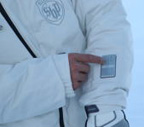
Chaqueteas wireless, botas sonoras, cacharrada escondida en el interior de tejidos y un largo etcétera. En la foto una chaqueta con iPod y alguna sorpresa más.

Conectar el pantalón a internet para actualizar su firmware, eso mismo.

chaqueta_sonora.jpg

MAS space audio

http://www-pw.physics.uiowa.edu/space-audio/

s p a c e a u d i o

Para finalizar (por el momento) con la info sobre “audio espacial”, aqui va esta colección de links relacionados, elaborada por el Prof. Donald A. Gurnett de la Univ. de Iowa.

R.gif

tremOr tactile music sleeve

http://nickconstantinou.com/

T R E M O R

LITERAL:
Nick Constantinou’s Tremor tactile music sleeve is a piece of clubwear that allows the user to “feel” the music that is being played in the club.

Constantinou wanted to enhance the overall musical experience in a new way. Rather than just hear the music he wanted to be able to map it on to the body in a tactile way.

The sleeve works by listening to the music through a tiny microphone and filtering the frequencies into bass, middle and treble. 5 miniature vibration motors housed within the sleeve react to these frequencies. The vibrations can be customised using the 3 buttons on the palm of the hand. They are ergonomically positioned to allow them to be pressed by the same fingers on that hand.

Lights on each vibration motor are triggered in tandem - these give a performance type viusal appeal and let others know that this is no ordinary piece of clothing. The power for all the electronics comes from 3 ultra slim rechargebale batteries.

The overall feeling of the sleeve is a tingling sensation that runs up and down the arm. The experience is enhanced if a sleeve is worn on both arms. According to the industrial design engineer, this technology could be applied to other pieces of clothing and there is also the potential that it can enhance the musical experience for those with hearing difficulties.

Fuente : we-make-money-not-art

DSC01755-(Large).jpg

radio signals from satellites and space vehicles

http://www.svengrahn.pp.se/sounds/sounds.htm

Radio signals from various satellites and space vehicles recorded near Stockholm, Sweden…

Soviet/Russian satellites
Chinese spacecraft
US spacecraft
Other satellites

soundcap.gif

space weather sounds

http://www.spaceweathersounds.com/
http://www.auroralchorus.com/

Welcome to the Realm of Natural VLF Radio Phenomena
“The Music of the Magnetosphere and Space Weather”

Earth’s Natural ELF-VLF radio signals in the audio-frequency radio spectrum - the radio sounds of the magnetosphere and space-weather - were the first radio signals people had ever heard beginning in the 1880’s on telephone lines. They are amazing and beautiful, and the variety to be heard is endless - I encourage everyone to listen to them!

This collection of naturally-occurring ELF/VLF audio recordings (now in MP3 file format) and the spectrograms below were made by Stephen P. McGreevy during 1996, 1998, 1999, 2000, and 2001. This page includes mono audio files recorded from tapes made during VLF recording sessions in Alberta and Manitoba, Canada (1993, 1995, 1996), STEREO recordings made in Waterton Peace Park, Alberta Canada, June 1998, and two additional Canadian Expeditions in 2000 and 2001. Plus, there are recent recordings made from the California desert near and in Death Valley National Park and the Eastern Sierra and Joshua Tree Nat. Park. in the Southeastern California desert, and abroad within Greater London, and the Donegal Coast of Ireland..

Hi-tech fish make their own music

http://news.bbc.co.uk/2/hi/technology/4693307.stm

Hi-tech fish make their own music

“Never work with animals and wireless networks,” cautions the digital artist, Julie Freeman.

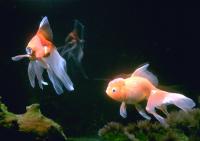
She is putting the finishing touches to an unusual exhibition that invites electronically tagged fresh-water fish to conduct their very own mood music.

Visitors who find their way to Tingrith Fishery in Bedfordshire, southern England, will find that amongst the fishermen, Ms Freeman has stealthily installed a gallery, housed in a 20ft-high converted cylindrical silo.

The exhibition called The Lake demonstrates how increasingly artists are collaborating with the makers of ground-breaking technologies to explore a brave new world of digital art.

Sixteen fish from the lake - an equal number of tench, rudd, goldfish and carp - have been volunteered for the exhibition. […]

Via : create_digital_music

goldie.jpg

B-Band DST Drum Shell Transducer

http://www.b-band.com/drum-systems/dst.php

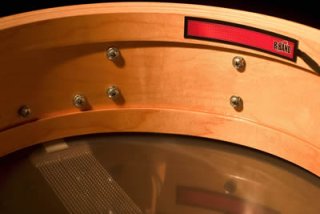
Micros para percusiones. Una “tirita” para las cajas y… voilá!!!

LITERAL:
The B-Band DST* 2100 is part of the DM* series mic system for drums, a remarkable new way to mic-up drums for great sound and super isolation. The DST 2100 is a very thin, only 0.03 mm, 21 mm by 100 mm condenser material that is very easy to stick to the drum shell. Because the material is thin and sensitive it picks up every natural sound of the drum.

b-band_micros.jpg

Discursos que no caducan

http://www.granular.fm/_/METASONIC_LX.php

Este evento ya ha pasado, hace casi dos semanas. Pero lo apunto aquí para comentaros que el abstract de presentación parecía sacado de un evento de los años 70, entre los concretistas franceses. La verdad es que titulares de este tipo son pura poesía sonora, y la batalla contra lo visual sigue abierta, ahí estamos unos pocos para mantener abierto el frente. Pues si, con esas estamos, en guerra contra lo visual. Ya está bien!!

LITERAL:
“METASONIC.LX Paisagens sonoras, gravações “de campo” e concretismos (o processo que consiste em abstrair os sons da fonte de que provêm) são elementos recorrentes nas novas músicas que utilizam de alguma maneira a electrónica, desde o simples microfone até ao mais potente computador, e também as áreas de intervenção da primeira edição do festival Metasonic.Lx, uma produção da Granular, associação cultural sem fins lucrativos que tem como propósito difundir e promover o experimentalismo na criação artística portuguesa”.

metasonic.jpg

Brain Opera

http://brainop.media.mit.edu/indexold.html

BRAIN OPERA

Literal:

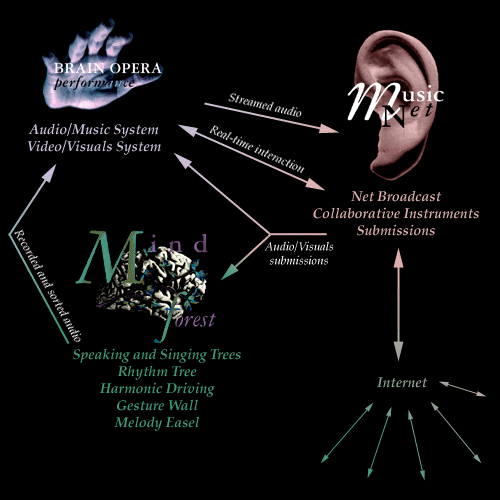
“Created by acclaimed composer Tod Machover and his team at the M.I.T. Media Laboratory, the BRAIN OPERA was a first-of-its-kind musical experience that included contributions from both on-line participants and live audiences. Anyone who wanted to express ideas, experiences, and feelings in music and sounds was able help create the Brain Opera and participate in the live performances. People of all backgrounds were welcome — we wanted musical inspiration and input from Mozart buffs, grunge rock fans, John Cage devotees, rappers, Verdi lovers, Deadheads…anyone who enjoys music. The Brain Opera toured worldwide from 1996-1998 (Europe, Asia, United States, South America), and has since been updated and expanded, including the addition of an entirely new culminating experience, the Future Music Blender. This definitive version of the Brain Opera will be permanently installed in Vienna, Austria in July 2000, at the new House of Music”

BODiag.gif

sonidOs espaciaLEs

http://www.nasa.gov/mission_pages/cassini/multimedia/pia07966.html

Eerie Sounds of Saturn’s Radio Emissions

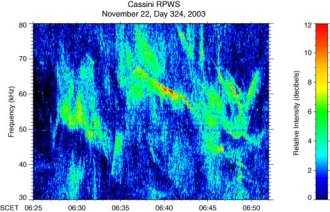
Saturn is a source of intense radio emissions, which have been monitored by the Cassini spacecraft. The radio waves are closely related to the auroras near the poles of the planet. These auroras are similar to Earth’s northern and southern lights. This is an audio file of radio emissions from Saturn.

The Cassini spacecraft began detecting these radio emissions in April 2002, when Cassini was 374 million kilometers (234 million miles) from the planet, using the Cassini radio and plasma wave science instrument. The radio and plasma wave instrument has now provided the first high resolution observations of these emissions, showing an amazing array of variations in frequency and time. The complex radio spectrum with rising and falling tones, is very similar to Earth’s auroral radio emissions. These structures indicate that there are numerous small radio sources moving along magnetic field lines threading the auroral region.

Time on this recording has been compressed, so that 73 seconds corresponds to 27 minutes. Since the frequencies of these emissions are well above the audio frequency range, we have shifted them downward by a factor of 44.

LISTEN / ESCUCHAR < <<

Fuente: alg-a

123158main_cas-skr1-112203-516.jpg

juanjofernández en el CAMPUSCREA

Si hubiese que recomendar algo sin temor a equivocarnos sería una sesión de Juanjo Fernández aka videotone y ahora que acaba de actualizar su web y hay mucho material no podía resistirme a ¿quizás el mejor vj español? puede que no… pero tú sabes…

CampusCrea / Campus Party en Valencia
Juanjo Fernández Aka Videotone nos ofrecerá una visión global de como y con que herramientas trabaja. El viernes taller de video en directo y el sábado haciendo visuales en directo para Fastliner.

viernes:
10:00 - Taller
Juanjo Fernández J.F Videotone [gNomalab]
CampusCrea

sábado
Fastliner Set Scape / J.F Videotone [gNomalab]

Más info:
http://web5.campus-party.org//index.php3?SEC=7&action=HOME&DIA=29&ID_AREA=

340
vaya dos… ,)