
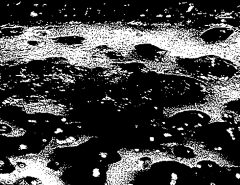
Quería sacar a la superficie la multiritmica colisión o competencia de áreas de fuerza bidimensionales de luz y de oscuridad, que luchan borde contra borde por adquirir la identidad de una forma
Ken Jacobs hablaba así de su cine en lo que según Antonio Weinrichter es una definición greenbergiana del medio. La identidad de la forma. Pero la manera de pensar la forma en obras como Capitalism Slavery o Disorient Express no es lírica como la de Malcolm Le Grice, es contundente y extenuante.
Esta búsqueda de la identidad de la forma parte del primitivismo, recuperando metraje antiguo y analizándolo en su repetición de manera exhaustiva. A partir de una sola imagen o de una toma muy corta, y mediante un elemento inherente al cinematógrafo como es el loop, la toma se transforma en algo más allá de lo que representaba. Pero mientras otros ejemplos como Letter to Jane de J.L. Godard usan una sola imagen como principio para una interpretación lingüística de su significado, la repetición de Jacobs convierte la imagen primero en significante y luego en materia.
La narración, lo lingüístico y casi lo icónico se ponen en duda como agentes definitorios de la identidad del audiovisual, generando otro análisis y otras cuestiones con respecto a su medio y a la importancia histórica de su materia. Cuando la imagen de la esclavitud es convertida en materia, se pone en duda su poder político. Y si el audiovisual no pertenece a la narración, pero tampoco al arte crítico, y pese a esa definición grengberiana tampoco pueda pertenecer jamás al arte de galería. ¿Qué lugar le pertenece al audiovisual? ¿De donde viene?
Para responder a esto me parece que los performances de Jacobs son esclarecedoras. Continuando con una actitud primitivista más radical que la del uso de metraje, Ken Jacobs usa la Linterna Mágica como instrumento de sus Nervous Magic Lantern Performances. La linterna mágica, recordemos, es representada por primera vez por Athanasius Kircher. El jesuita hizo algo que cambiaría seriamente la manera de entender las imágenes. Invirtió el proceso de la cámara oscura que recibe imágenes del exterior al interior del aparato, llevando estas de dentro a afuera, e inventando la proyección. Es decir la imagen deja de ser reflejo pasivo, y se hace una entidad activa, parte y transformadora de la realidad. Este artefacto ya había sido usado por Etienne-Gaspard Robertson quien en 1798 en Bélgica, lleva la linterna mágica mucho más allá de la mera proyección de imágenes fijas y en movimiento. Usando múltiples proyectores, humo y sonidos más o menos envolventes, se cuenta que llegó a causar lo que hoy intentamos describir como inmersión sensorial, llevando a sus espectadores a veces a la pérdida de conciencia y protagonizando una investigación por el uso de “fantasmas reales”.
Jacobs lleva a la imagen a un estado primigenio anterior al del celuloide que es la luz. Una imagen sin significado y sin materia es evidentemente luz. Es llevando la imagen a su esencia luminosa como se equipara con el sonido. En el libro Listening to noise and silence, Salomé Voegelin expone que el sonido no es la relación entre el evento sonoro o fenómeno y lo que yo oigo, es la cosa en si. Hay que hacer una escucha activa de la cosicidad del sonido del arte. Para ello se basa en la cita de Merleau Ponty que expone que nosotros no vemos los azulejos de una piscina, sino el agua que está entre ellos. Yo no veo a los esclavos, veo a la luz que los conforma. Del mismo modo, la destrucción del significado de la imagen y el uso de la linterna mágica producen de manera conceptual primero, y mediante una reflexión histórica de su materia después, convertir la imagen en luz, para así conocerla mediante la experimentación de su cosicidad.

Leave a Reply
Lo siento, debes estar conectado para publicar un comentario.