
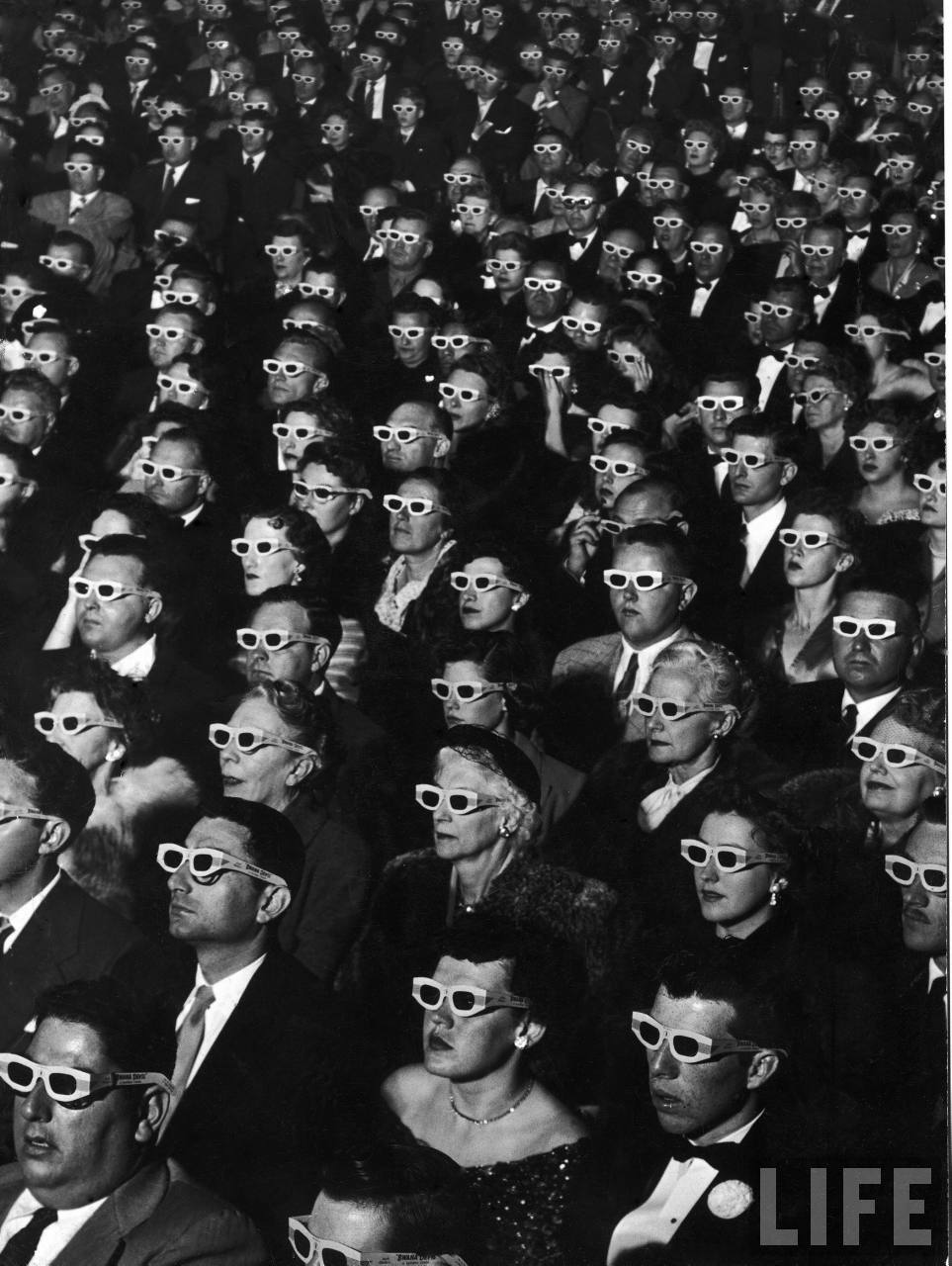
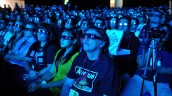
 Los medios de comunicación hablan estas semanas del Avatar Blues, un juego de palabras que se refiere a la depresión post-visionado de esa película descrita como experiencia inmersiva total; un deseo de volver a ser un exo-cuerpo azul en la luna de Pandora y que al parecer llega a las tendencias suicidas.
Por fin se han dado, sin que sean necesarias metáforas explicativas, aquellos métodos de alienación distópica basados en el espectáculo total, hoy casi románticos y poco relevantes a la hora de repensar ciertos hechos. Pero hay algo interesante en esta obscenidad de lo espectacular o lo hiperreal. 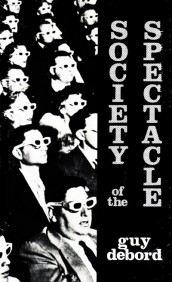 Caroline A. Jones, en la introducción a Sensorium, presenta lo inmersivo como lo referente al mito de la caverna, aquel en el que los hombres sólo podían ver las sombras del mundo real, el de la ideas. Cuando en 1996 Jeffrey Shaw realiza la instalación ConFIGURATING THE CAVE, quizás tenga algo de relación con esto.
Aquellas ideas proyectadas en la sala de cine de la portada de Debord estaban llenas de patriotismo y fascismo rancio, mientras que las de esta película que ha conseguido ese efecto de alienación total, esa necesidad de volver a otro mundo, es una mezcla new age de conceptos malinterpretados de aldea global e inteligencia colectiva. Si ésta es la caverna de nuestros días, es que nuestras ideas están en coma.
Suele hablarse del mito de la caverna y de la sala de cine porque el primero parece ser una metáfora de la segunda. Pero sobre todo porque en la historia técnica del cinematógrafo está esa misma explicación. La imagen-movimiento y su versión live-cinema nacen, queriendo o sin querer, como proyección en sombras del mundo de las ideas; las historias hablan de los teatros de sombras indonesios y, poco a poco, de las cámaras lúcidas y otros ingenios ópticos. El mecanismo de estos ingenios (la proyección) es luz filtrada en imagen; y esa imagen es, al menos en Occidente, un eslabón de los sistemas de representación modernos basados en las “artes del diseño”. Resumiendo, composiciones gráficas basadas en la geometría, que supuestamente regía el cosmos. Pequeños microcosmos que contenían, entre otras cosas, las ideas de las que venimos hablando traducidas en formas.
Las historias del Live-Cinema suelen comenzar con una historia de la técnica porque las obras de las que se ocupa ya no se explican como representaciones proyectadas, sino como el mecanismo de proyección. Lo que nos ocupa es la creación de obras que funcionan como las gafas de los cines, no como las películas que esas lentes filtran, y que hacen del medio cinematográfico un mecanismo de percepción, no de representación. En ocasiones la inmersión cinematográfica no recrea, sino que hace sensibles los sentidos, permite ver cómo vemos, escuchar cómo oímos y mezclarlo todo. En esa sensación sinestésica se entiende algo no verbalizable: una idea, por ejemplo.
Así es que no resulta extraño que si ésta no es la historia de la representación, tampoco tenga mucho que ver con la historia de la narración cinematográfica. Cualquier persona familiarizada con la historia del cine se habrá dado cuenta de que esa historia es un relato sobre la narración audiovisual. En la historización del medio audiovisual, éste nunca dejó de hacer cosquillas en los ojos. Igual que nos encontramos con una parte de la historia cinética en que se proyectaban representaciones gráficas de la realidad, hay otra historia en la que serían las formas musicales y sus relaciones ideales con el color las que regirían las composiciones audiovisuales. Una historia de la abstracción que va más allá de la pintura y que por supuesto desborda los límites de las vanguardias artísticas y del arte del s.XX. La historia de la sinestesia, en definitiva, es también un principio imprescindible del audiovisual.
Pese a que esta historia de la abstracción supere la historia de la vanguardia, caminan juntas en cuanto a su intención de llegar a algún otro lugar mediante la percepción de formas “puras”. Aquí es donde más dudas nos han surgido a la hora de presentar el audiovisual: qué obras son inmersivas y cuáles son meramente cine experimental. En efecto, algunas de ellas se plantean una destrucción o evolución del lenguaje artístico que tiene como fin, o así lo hemos creído mucho tiempo, un cambio. El arte como transformador era, al parecer, el principio de la vanguardia artística.
A este problema sobrevino la duda de cómo la abstracción sería capaz de cambiar nada, si lo que era necesario eran esas formas gráficas reconocibles que se iban cristalizando en representaciones narrativas. A día de hoy parece una respuesta obvia. Mirando las dos fotos con que hemos encabezado el texto, nos damos cuenta cuales fueron algunos de los resultados de esa tendencia narrativa, constatando literalmente las peores sospechas.
Esta imagen en movimiento nos lleva una y otra vez a la sensación de lo sensible, al replanteamiento del adentro y el afuera, de la realidad en la que estamos entrando o saliendo, y así a recomponer nuestra concepción convencional de lo que sentimos. Una inmersión estética que señala los límites o la falta de ellos entre la obra y su afuera.
Con esto no se pretende hacer una historia continuísta de la vanguardia, más que nada porque caeríamos en el mismo problema que queremos salvar, algunas de las obras que se presentarán los siguientes meses, han aprendido de sinestesia en las salas de baile. Lo que se trata es de exponer a que nos podríamos referir cuando hablamos de inmersión. Creo que es ese tipo de estética en la que vamos a centrarnos.

Leave a Reply
Lo siento, debes estar conectado para publicar un comentario.