Inmersion Into Noise

|

Immersion Into Noise by Joseph Nechvatal
Series: Critical Climate Change

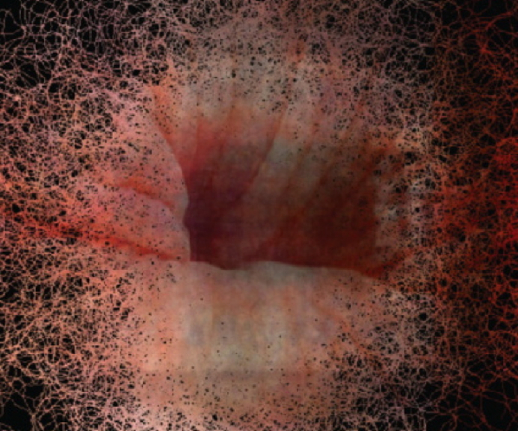
The noise factor is the ratio of signal to noise of an input signal to that of the output signal. Noise can block or interfere with the meaning of a message in both human and electronic communication. But in Information Theory, noise is still considered to be information.

By refining the definition of noise as that which addresses us outside of our preferred comfort zone, Joseph Nechvatal’s Immersion Into Noise investigates multiple aspects of cultural noise by applying the audio understanding of noise to the visual, architectural and cognitive domains. Nechvatal expands and extends our understanding of the function of cultural noise by taking the reader through the immersive and phenomenal aspects of noise into algorithmic and network contexts, beginning with his experience in the Abside of the Grotte de Lascaux.

Immersion Into Noise is intended as a conceptual handbook useful for the development of a personal-political-visionary art of noise. On a planet that is increasingly technologically linked and globally mediated, how might noises break and re-connect in distinctive and productive ways within practices located in the world of art and thought? That is the question Joseph Nechvatal explores in Immersion Into Noise.

http://openhumanitiespress.org/immersion-into-noise.html

Descargar

Soundscape explorations

|

http://soundexplorations.blogspot.com/

This is a directory of Internet videos ( and some slide/sound programs) related to the field of Acoustic Ecology. On the left are the most recent additions to this Blog. The Archive below provides access to all the other videos that have been added over time.

Bangkok Is Ringing

|

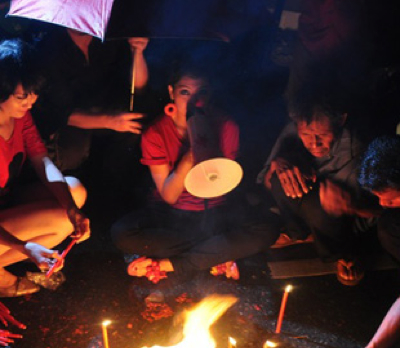
The conclusion of a series exploring the politics of urban sound in Bangkok and beyond, through first-person reporting, field recordings, and analysis. In 2010 and 2011, protest was something of a way of life in Bangkok, with a culture developing around the constant demonstrations and occupations. In this episode, Tausig explores the audio spaces of the protests, recording the music, political oratory, and improvised broadcast systems that flourished among the opposition encampments.

Puedes escuchar el podcast aquí

Santiago Orta y el nuevo órgano de la catedral Córdoba

|

Recomiendo ir leyendo el post con este audio de fondo

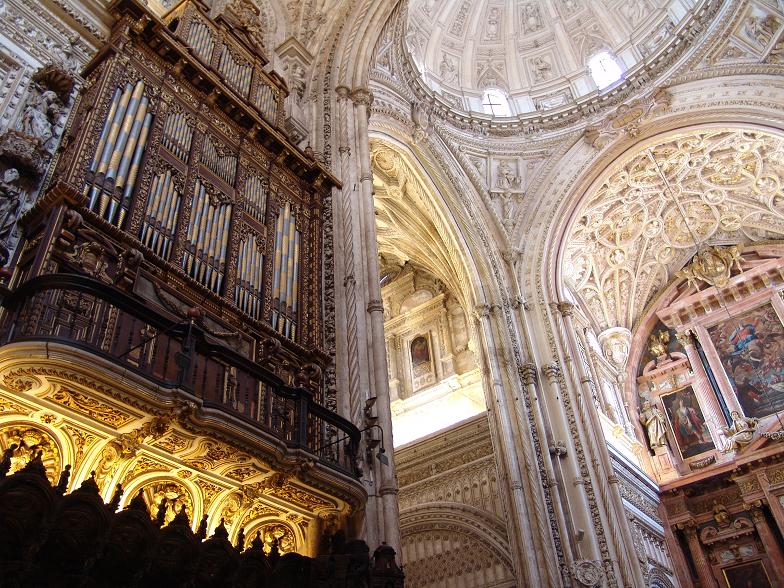
Hace poco paseaba por la catedral/mezquita de Córdoba en uno de los ratos libres antes del masaje sonoro que iba a recibir de Pascal Battus en Sensxperiment 2011.
Al llegar al altar mayor de la catedral cristiana, comencé a fijarme en la escultura de San Lucas en su forma tetramórfica (es decir, en forma de toro) recordando la historia que me contó mi padre sobre ese toro trayendo las columnas una a una para la mezquita. Recordé cómo las historias orales se adornan con las incertezas, frente al conocimiento iconográfico que me decía que un toro de piedra es un evangelista y no un homenaje a un toro obrero. La historia de mi padre era mejor.

El caso es que mirando a San Lucas, comencé a escuchar unos sonidos extraños. Primero uno mecánico repetitivo, luego de golpes secos, luego como de flauta. Comencé a grabar. La acústica era peculiar, de un coro de madera, contra una cúpula de piedra, contra un bosque de columnas, llenos de voces y de sonidos metálicos del carillón.

En un principio pensamos que alguien limpiaba el órgano, de ahí el sonido metálico. Cuando me disponía a irme, me animaron preguntar, subir y grabar esta limpieza. Pero no se estaba limpiando, sino construyendo un nuevo órgano. Lo que no nos esperábamos eran los 20 minutos de charla que tuvimos a continuación.
Para un fan como yo de la música especulativa, esto es, música de las esferas, teórica y matemática, todo lo que va contando Santiago Orta de Organería Navarra, y en el orden en que lo cuenta, son principios vitales.
Seguramente dentro de los patrones del arte sonoro y las músicas experimentales actuales, oír hablar de la futilidad de la escala no parezca gran cosa. El asunto, recordemos, es que estamos hablando a los pies de un órgano preparado para obras barrocas y románticas, lo que pone de manifiesto esa otra sensibilidad de época, no la estética, sino la tecnológica. Estamos hablando aquí de una cultura de la escucha basada en los conocimientos científicos y tecnológicos actuales. Atención al minuto 11.30 o al 17.30, donde se recitan muchas máximas, hasta la del cerebro reptil que tanto gusta usarse en las campañas de neuromarketing de la última década.

Santiago se incluiría dentro de una vertiente de organeros que no respeta los criterios históricos musicales, tan de moda desde hace unos años, y construye los órganos con criterios tecnológicos y acústicos actuales. Claro que quien quiera pelearse en este asunto, aquí tiene un foro.

Optical Sound Films

|

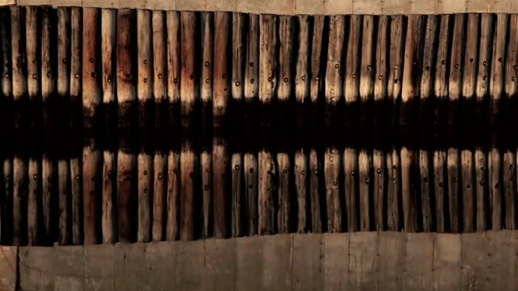
ENCUENTRO CON GUY SHERWIN: OPTICAL SOUND FILMS from Revista Lumière on Vimeo.

Desde la muy destacable Lumiere, nos llega este video de Francisco Algarín Navarro y Féliz García de Villegas realizado a partir del encuentro con Guy Sherwin en (S8). Mostra de cinema periférico en A Coruña.
Encuentro con Guy Sherwin en el marco de las proyecciones de:

MINIROC

|

Si no tienes coche, ni siquiera bici, boomboxeate la espalda. Via Ruido y capitalismo.

Convocatoria de “Political Remix Videos”

|

Desde EMBED.at/remix se lanza convocatoria de vídeos de remezcla política. El plazo termina el 25 de diciembre de 2011.

«Political Remix Video» es un género audiovisual que utiliza la transformación DIY de los medios en donde los artistas critican las estructuras de poder, deconstruyen mitos sociales y desafían a los medios dominantes con técnicas de re-cutting and re-framing de fragmentos de los grandes medios y de la cultura popular.

Estos trabajos de remezcla tienen sus raíces en la tradición del détournement donde los artistas modificaban y subvertían los mass media, proponiendo nuevos mensajes y narrativas. Aunque los «Political Remix Videos» varían ampliamente en forma, temas y mensajes, comparten aspectos similares con la técnica situacionista.

Primero, «Political Remix Videos» presentan mensajes políticos. La palabra «política» en este contexto se refiere a trabajos que son críticos no sólo con las instituciones y los gobiernos sino también en aspectos sociales y culturales como género, raza, sexualidad o medio ambiente.

Segundo, «Political Remix Videos» son trabajos de guerrilla que se apropian de material con propiedad intelectual sin permiso de sus titulares. Además, estas remezclas suelen ser bastantes críticas con sus fuentes así que pueden vulnerar o provocar reclamaciones de la DMCA (Ley de Propiedad Intelectual en Estados Unidos).

El objetivo de la convocatoria es hacer una selección que funcionará como playlist para eventos EMBED (a celebrar durante el año 2012). Cada vez que esta selección sea proyectada cada autor recibirá, en concepto de comunicación pública, la cantidad fija de 150€ (impuestos incluidos).

Data/Fields [ampliada hasta el 11/12 Washington DC]

|

ABOUT THE EXHIBITION

Data/Fields is curated by renowned sound artist Richard Chartier.

These selected and commissioned works at Artisphere are the artists’ gallery debut in the Washington, DC area and include two premiere exhibitions in the United States.

Help bring artist Mark Fell and curator Richard Chartier to Artisphere to perform in Multistability: Live, a concert on Wednesday, October 19. “Sharply installed and smartly edited mini-survey of cutting-edge contemporary art… the works in “Data/Fields” sharpen your senses, even as they blur the boundary between sight and sound.” – The Washington Post

Data are points that flow through fields. We can pause in these fields and extract the information. If data fields are those set boundaries in which we place, consider, and collect information, then a gallery might be a great plane of these fields. Or, leaving the natural world for the subjective, it could become an index, compiled by artist and viewer together. Created by five noted international artists, the works in Data/Fields utilize the thematic implications of the data field as they transform gallery space into hubs of sensory information: sites of signal, noise, presence, and absence. The viewer/listener becomes another connection, another point, in the flow and transferral of data.

ABOUT THE ARTISTS

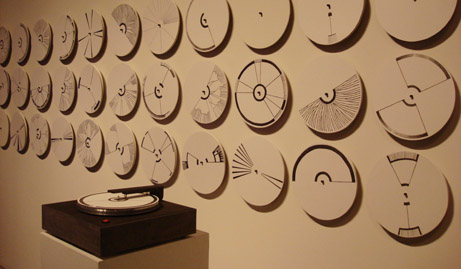
Caleb Coppock (U.S.) Graphite Sequencer, 2007-201, graphite, paper, tone generator, wire, wood, custom housed turntable

Mark Fell (U.K.) Tone Pattern Transactuality, 2011, computer generated sound and image

Andy Graydon (U.S./Germany) Untitled (band pass Arlington), 2011, sculptural video installation

Ryoji Ikeda (Japan) data.scan, 2009, digital audio & video. computer, monitor, loudspeaker, wood plinth, 6 minute (loop)

France Jobin (Canada) Entre-deux, 2011, 6-channel site specific sound installation, 144 minute cycles

ABOUT THE CURATOR

Richard Chartier (curator) (b.1971), sound and installation artist, is considered one of the key figures in the current of reductionist electronic sound art which has been termed both “microsound” and Neo-Modernist. Chartier’s minimalist digital work explores the inter-relationships between the spatial nature of sound, silence, focus, perception, and the act of listening itself. Chartier’s sound works/installations have been presented in galleries and museums internationally, including the 2002’s Whitney Biennial. He has performed his work live across Europe, Japan, Australia, and North America at digital art/electronic music festivals and exhibits.

In 2000 he formed the influential recording label LINE and has since curated its continuing documentation of compositional and installation work by international sound artists/composers exploring the aesthetics of contemporary and digital minimalism. In 2007 he curated the sound/video program Colorfield Variations, a collection of works influenced by the Color Field painting movement. This program continues to screened and exhibited and digital/film festivals, museums, and art galleries around the world. In 2010, Chartier was awarded a Smithsonian Institution Artist Research Fellowship. 3particles.com + lineimprint.com